As the UAE cements its position as a global logistics and trade hub, warehouses across Dubai, Abu Dhabi, Sharjah, and the wider Emirates are under constant pressure to store more, move faster, and operate smarter. Behind every well-run distribution center or fulfillment facility lies a system most customers never see — industrial racking. Choosing the right racking system in the UAE is no longer just a storage decision; it is a decision that directly affects efficiency, safety, and profitability.
Why Industrial Racking Matters More Than Ever
The rise of e-commerce, free zone trading, and re-export business has turned warehousing into one of the most competitive sectors in the region. Every square meter of floor space now carries a cost, and businesses that fail to optimize vertical storage end up paying for warehouse space they don’t actually use efficiently. Industrial racking systems solve this problem by making full use of a warehouse’s height, not just its footprint, allowing companies to store significantly more inventory without expanding their physical premises.
Beyond space optimization, racking systems also play a major role in workplace safety. Poorly designed or overloaded shelving is one of the leading causes of warehouse accidents. A properly engineered racking system, built to local safety standards and load requirements, protects both staff and stock.
Types of Racking Systems Used Across UAE Warehouses
Not every warehouse operates the same way, which is why racking solutions come in several distinct formats, each suited to different inventory types and handling methods.
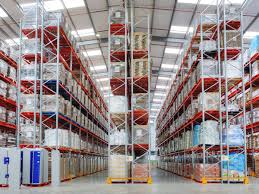
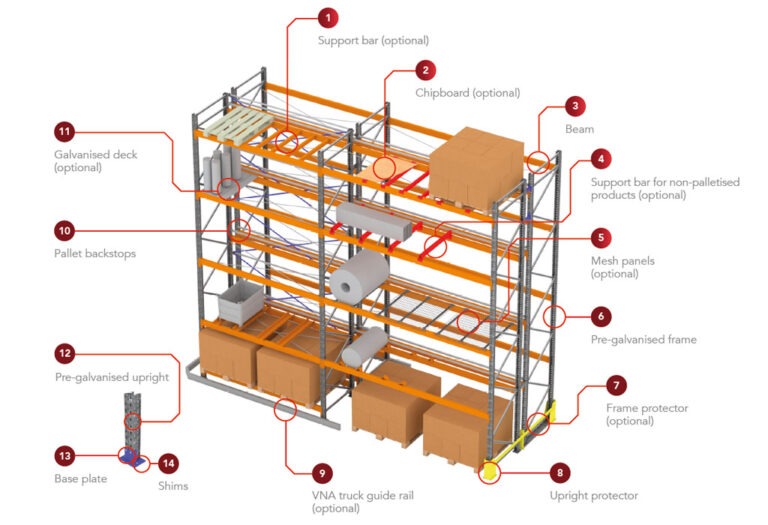
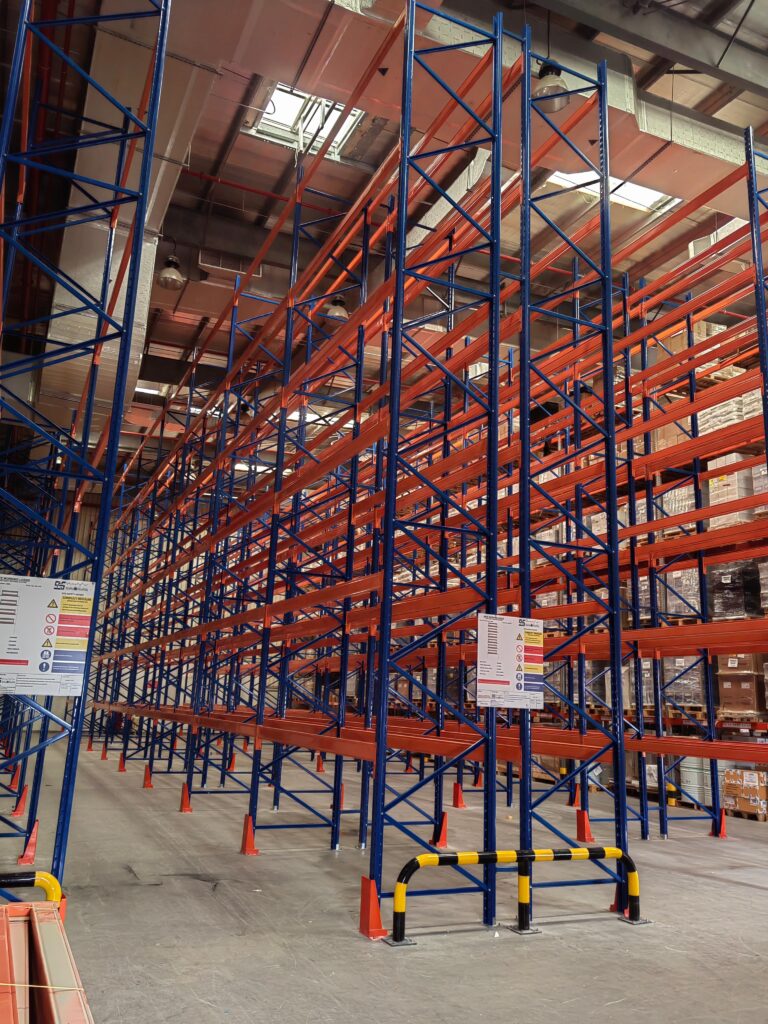
Selective Pallet Racking is the most widely used system in the region, offering direct access to every pallet. It suits warehouses that manage a wide variety of SKUs and need quick, flexible picking.
Drive-In and Drive-Through Racking maximizes storage density by allowing forklifts to enter the racking structure itself. This system works well for businesses storing large quantities of a single product, such as bulk food items or building materials.
Cantilever Racking is designed for long, awkward, or irregularly shaped items like pipes, timber, or steel bars — making it a natural fit for the UAE’s active construction and industrial materials sector.
Mezzanine Floor Systems create an entirely new storage level within an existing warehouse, effectively doubling usable space without the cost of relocating or expanding the building.
Push-Back and Pallet Flow Racking use gravity or rolling mechanisms to automatically move stock forward, ideal for high-turnover operations that follow a first-in, first-out inventory approach.
Key Factors to Consider Before Choosing a Racking Supplier
Selecting a racking system is a long-term investment, and getting it wrong can be costly to fix later. Businesses should evaluate a few critical factors before committing to a supplier.
Load Capacity and Structural Testing – Racking must be engineered to handle the actual weight of stored goods, with a safety margin built in. Suppliers should be able to provide load ratings backed by proper testing.
Compliance with Local Safety Standards – UAE warehouses are subject to specific safety and building regulations. A reputable supplier designs and installs racking that meets these requirements from the outset, avoiding costly retrofits later.
Customization for Warehouse Layout – Every facility has a different ceiling height, aisle width, and floor load capacity. The best suppliers assess a warehouse’s specific dimensions and workflow before recommending a system, rather than offering a one-size-fits-all solution.
Material Quality and Corrosion Resistance – Given the region’s heat and humidity, especially in coastal cities, racking built from high-grade steel with proper coating resists rust and structural fatigue over time.
Installation and After-Sales Support – Professional installation ensures the system is anchored, leveled, and safe from day one. Ongoing inspection and maintenance support also help extend the racking’s operational life.
Supporting Growing Businesses Across Sectors
Industrial racking isn’t limited to large logistics companies. Retailers, manufacturers, cold storage operators, pharmaceutical distributors, and construction material suppliers all rely on tailored racking systems to keep operations organized. Cold storage facilities, for instance, often require racking designed to withstand low temperatures and frequent forklift movement, while pharmaceutical warehouses may need systems that support strict traceability and organized batch storage.
As UAE free zones and industrial areas continue to attract new businesses, demand for scalable racking solutions keeps growing. Many suppliers now offer modular systems that can expand alongside a business, allowing companies to add more racking bays as inventory grows rather than redesigning the entire warehouse from scratch.
Final Thoughts
Industrial racking may not be the most visible part of a warehouse, but it is one of the most important. It determines how efficiently space is used, how safely staff can operate, and how smoothly goods move from storage to shipment. For businesses across the UAE, partnering with an experienced racking supplier who understands local conditions, safety standards, and warehouse-specific needs is a decision that pays off through years of reliable, efficient storage. Whether setting up a new facility or upgrading an existing one, investing in the right racking system lays the foundation for smarter, safer, and more scalable warehouse operations.
FAQs: Industrial Racking UAE
1. What is industrial racking used for?
Industrial racking is used to organize and store palletized or bulk goods in warehouses, making full use of vertical space while keeping inventory accessible and safe.
2. Which type of racking is best for a UAE warehouse?
It depends on the operation. Selective pallet racking suits businesses with varied SKUs, drive-in racking works for bulk single-product storage, and cantilever racking is ideal for long items like pipes or steel bars.
3. How much weight can industrial racking hold?
Load capacity varies by design, typically ranging from a few hundred kilograms per level to several tons per bay. A supplier should provide certified load ratings based on your specific requirements.
4. Is industrial racking customizable for different warehouse sizes?
Yes. Reputable suppliers assess ceiling height, aisle width, and floor load before recommending a system, and most racking is modular so it can expand as your business grows.
5. How long does racking installation take?
Installation time depends on warehouse size and system complexity, but most standard projects are completed within a few days to a couple of weeks.