
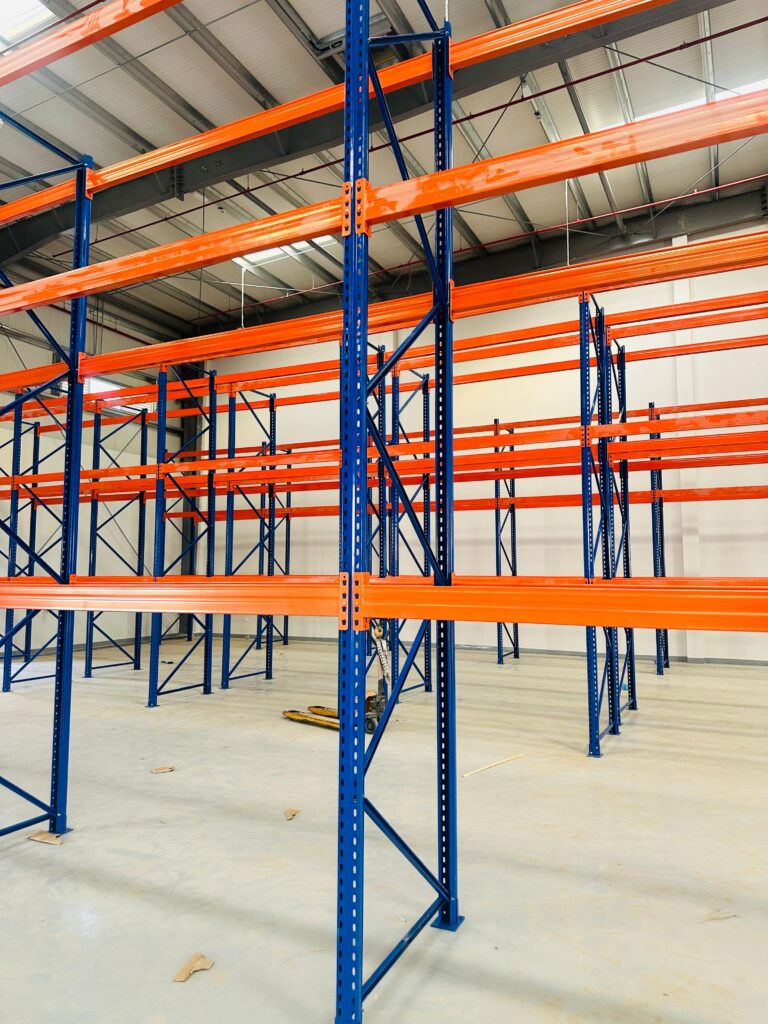
Walk into any Pallet Racking in Industrial Arease across Jebel Ali, Dubai Investment Park, KIZAD, or Ras Al Khaimah’s industrial zones, and you’ll notice one thing right away — space is money. In a country where logistics and trade fuel much of the economy, how a business stores its goods can make or break its bottom line. That’s where pallet racking comes in, quietly doing the heavy lifting (literally) behind some of the busiest supply chains in the region.
Why Storage Matters So Much Here
The UAE isn’t just a market —Pallet Racking in Industrial Areas it’s a hub. Goods pass through free zones like Jebel Ali Free Zone (JAFZA), Dubai South, Sharjah Airport International Free Zone (SAIF Zone), and Khalifa Industrial Zone Abu Dhabi (KIZAD) on their way to destinations across the Middle East, Africa, and South Asia. That kind of traffic demands warehouses that can flex with demand, protect inventory, and make every square meter count.
Real estate in these zones isn’t cheap, and vertical space is often the only space left to exploit. This is exactly why pallet racking systems have become less of an option and more of a necessity for businesses operating in the UAE’s industrial corridors.
What Makes Pallet Racking So Essential
At its core, Pallet Racking in Industrial Areas is a structural system designed to store palletized goods in an organized, stackable, and accessible way. But in practice, it’s the backbone of efficient warehousing. A well-designed racking system does a few things at once: it maximizes vertical storage, keeps inventory organized and traceable, speeds up picking and dispatch, and reduces the risk of damage or workplace accidents.
For businesses in free zones especially, where many operations involve re-exporting, consolidation, or just-in-time distribution, the ability to store more in less space directly affects operational costs and turnaround times.
Types of Pallet Racking Suited to UAE Warehouses
Not every Pallet Racking in Industrial Areas warehouse needs the same racking setup, and this is where a lot of businesses get it wrong by choosing a one-size-fits-all approach.
Selective pallet racking remains the most common choice, largely because it offers direct access to every pallet. It works well for businesses with a wide variety of SKUs and frequent order picking — think distribution centers handling consumer goods or spare parts.
Drive-in and drive-through racking suits operations dealing with high-volume, low-variety stock, such as bulk commodities or seasonal goods. Forklifts drive directly into the racking lanes, which sacrifices some accessibility but dramatically increases storage density — a smart trade-off in high-rent zones like JAFZA.
Push-back racking offers a middle ground, allowing multiple pallets deep storage per lane while still maintaining LIFO (last-in, first-out) accessibility. It’s a favorite among businesses that want density without fully committing to drive-in systems.
Cantilever racking is worth mentioning too, particularly for industries dealing with long or irregular items like pipes, timber, or steel — common in the UAE’s construction and manufacturing sectors.
Mezzanine and multi-tier racking solutions have also grown in popularity as businesses look to add an entire extra “floor” of storage without expanding their physical footprint, which is often not even possible given how leased warehouse units are structured in most free zones.
Free Zone Considerations Businesses Often Overlook
Setting up Pallet Racking in Industrial Areas in a free zone warehouse isn’t quite the same as doing it elsewhere. Many free zone facilities come with specific structural limitations, fire safety codes, and civil defense requirements that racking systems must comply with. It’s not unusual for a business to invest in a racking system only to find out it doesn’t meet the load-bearing specifications of the building, or that it obstructs fire exits and sprinkler zones.
This is why working with a supplier who understands UAE-specific regulations — including Dubai Civil Defence and Trakhees requirements where applicable — matters just as much as the racking design itself. Getting this wrong doesn’t just risk a failed inspection; it risks the safety of workers and the integrity of stored goods.
Climate is another factor that’s easy to underestimate. The heat and humidity in the region can affect certain coatings and materials over time, so racking built with proper anti-corrosion treatment tends to hold up far better in the long run, particularly in coastal warehouses near Abu Dhabi or Sharjah.
Getting the Right Fit
There’s a tendency for businesses to either overbuild Pallet Racking in Industrial Areas investing in heavy-duty systems they don’t need — or underbuild, only to outgrow their racking within a year or two. Neither approach saves money in the long run.
A smarter path usually starts with an honest look at inventory type, turnover rate, forklift specifications, and future growth plans before choosing a system. Reputable racking suppliers in the UAE typically offer site assessments and layout planning as part of their service, which helps avoid costly retrofits later.
Final Thoughts
Pallet Racking in Industrial Areas might not be the most glamorous topic in logistics, but it’s one of the most consequential. For businesses operating across the UAE’s industrial areas and free zones, the right racking setup isn’t just about storage — it’s about efficiency, safety, and staying competitive in a region where speed and space both come at a premium. Taking the time to choose wisely now tends to pay off for years down the line.
