
Drive-In Racking vs Selective Pallet Racking in Dubai
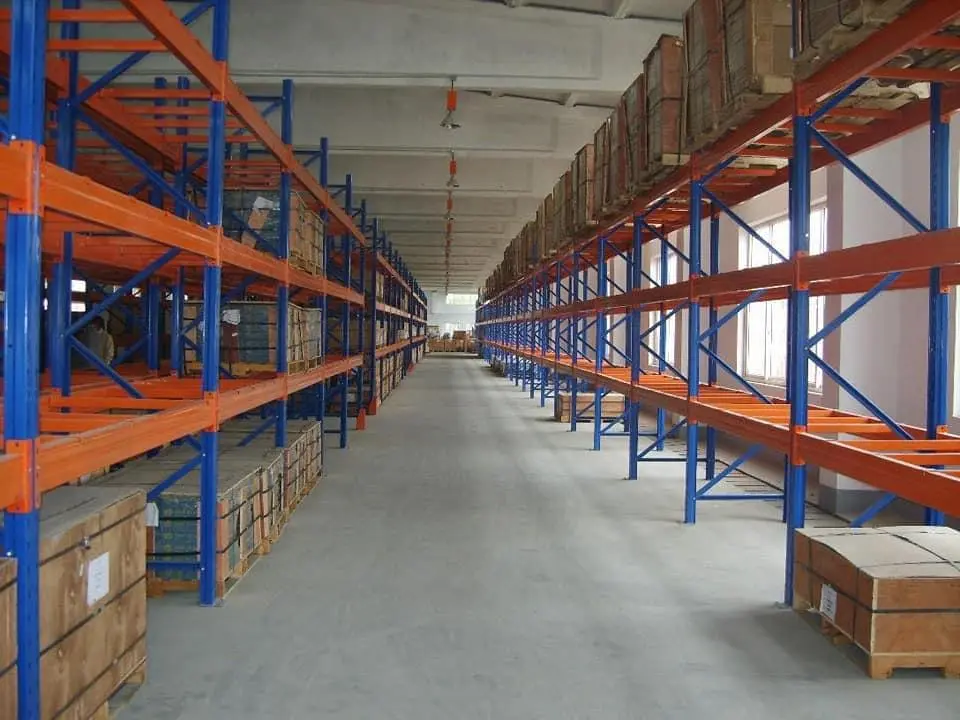
Drive-In Racking vs Selective Pallet Racking in Dubai isn’t cheap. Whether your facility is in Jebel Ali, Dubai Investments Park, Al Quoz, or Dubai South, every square metre has to earn its keep. The racking system you choose affects how much stock you can hold, how fast your team picks orders, and how much you spend on labour and equipment.
Two of the most common options are selective pallet racking and drive-in racking. They solve very different problems, so here is how they compare.
What Is Selective Pallet Racking?
Selective racking is the most widely used pallet storage system in the world, and probably the one you picture when you think of a warehouse. Pallets sit on horizontal beams between upright frames, in rows with aisles between them.
Its big advantage is that every pallet is directly accessible. If you need the pallet at the back of the third level, you can reach it with a forklift without moving anything else.
Strengths:
- 100% access to every pallet
- Works with almost any product, pallet size, or turnover rate
- Easy to install, reconfigure, and expand
- Supports FIFO (first in, first out) stock rotation
- Lower upfront cost per pallet position
Limitations:
- Needs more aisle space, so lower storage density
- Uses more floor area for the same number of pallets
What Is Drive-In Racking?
Drive-in racking takes the opposite approach. Instead of many aisles, it creates deep storage lanes. Forklifts drive into the rack structure and place pallets on continuous rails, one behind the other. Because there are far fewer aisles, you fit many more pallets into the same footprint.
The trade-off is access. Drive-in systems generally work on a LIFO (last in, first out) basis. The last pallet loaded is the first one out, and you can’t reach a pallet deep in the lane without removing the ones in front. (A drive-through variant, loaded from one side and unloaded from the other, allows FIFO.)
Strengths:
- Much higher storage density
- Fewer aisles means better use of expensive floor space
- Ideal for large quantities of the same product
- Excellent for cold rooms, where every cubic metre costs money to cool
Limitations:
- Limited selectivity, since you can’t pick any pallet at will
- Not suited to products with strict expiry-date rotation (in the standard LIFO version)
- Forklift operators need more skill, and rack damage is a risk if they are careless
- Best with uniform pallet sizes and quality
Drive-In Racking vs Selective Pallet Racking in Dubai Side-by-Side Comparison
| Factor | Selective Racking | Drive-In Racking |
|---|---|---|
| Pallet access | Every pallet, anytime | Limited, lane by lane |
| Storage density | Moderate | High |
| Stock rotation | FIFO-friendly | LIFO (standard) |
| Best for | Many SKUs, varied products | Few SKUs, large quantities |
| Floor space needed | More | Less |
| Setup cost per position | Lower | Often higher per rack, lower per m² used |
| Picking speed | Fast and flexible | Slower |
| Forklift skill level | Standard | Higher |
Which Is Better for Dubai Businesses Drive-In Racking vs Selective Pallet Racking in Dubai?
Neither is better in every situation. The right choice depends on your stock profile.
Choose selective pallet racking if:
- You manage a wide range of SKUs, as in e-commerce, retail distribution, spare parts, or FMCG
- Products have different sizes, weights, or expiry dates
- You pick orders frequently and need fast access
- Your business is growing or changing, and you want layouts you can adjust easily
Choose drive-in racking if:
- You store large volumes of a small number of products, such as beverages, bulk food items, or packaged goods
- Your goods are not highly time-sensitive, or your batches move together
- You operate a cold storage or freezer facility, where reducing the space you cool saves real money on electricity
- Warehouse rent or space is your biggest cost
Drive-In Racking vs Selective Pallet Racking in Dubai -Specific Things to Consider
1. Rent and space costs. In prime logistics zones, space is a premium. Drive-in racking can reduce the footprint you need, sometimes meaningfully, which can offset the higher complexity.
2. Climate. Dubai’s heat makes cold chain storage essential for food, pharmaceuticals, and perishables. Drive-in systems are popular in cold rooms because they pack more stock into a smaller, cheaper-to-cool volume.
3. Safety and compliance. Racking in the UAE should be designed and installed in line with relevant standards and local authority requirements, including Dubai Civil Defence guidelines for fire safety and sprinkler clearance. Always confirm requirements with your supplier and the authorities.
4. Load and seismic design. Make sure your supplier calculates beam capacity, upright strength, and floor loading for your actual pallet weights, not just average ones.
5. Future growth. A system that fits today may not fit in three years. Selective racking is easier to expand; drive-in layouts are more fixed once built.
Can You Combine Both Drive-In Racking vs Selective Pallet Racking in Dubai?
Yes, and many smart warehouses do. A common approach is to put fast-moving, varied SKUs in selective racking near the dispatch area, and bulk, slow-moving, or seasonal stock in drive-in racking toward the back. This gives you density where you need it and flexibility where it matters.
A Quick Decision Guide
Drive-In Racking vs Selective Pallet Racking in Dubai Ask yourself these questions:
- How many different products do I store?
- How often do I need to reach specific pallets?
- Do my goods have expiry dates that require strict FIFO?
- How expensive is my floor space, or my cooling cost?
- Will my product range change in the next few years?
If you answered “many products, frequent access, strict rotation,” go selective. If you answered “few products, large batches, high space cost,” drive-in is probably your answer.
Final Thoughts
The right Drive-In Racking vs Selective Pallet Racking in Dubai racking system is the one that fits how your warehouse actually operates. Selective pallet racking gives you flexibility and easy access, while drive-in racking gives you density and space savings. Before you decide, it’s worth having a warehouse specialist review your pallet profile, throughput, and floor plan. A properly designed layout can pay for itself through lower operating costs and faster handling.