
Industrial Pallet Racking Dismantling and Reinstallation in Industrial Areas and Free Zones
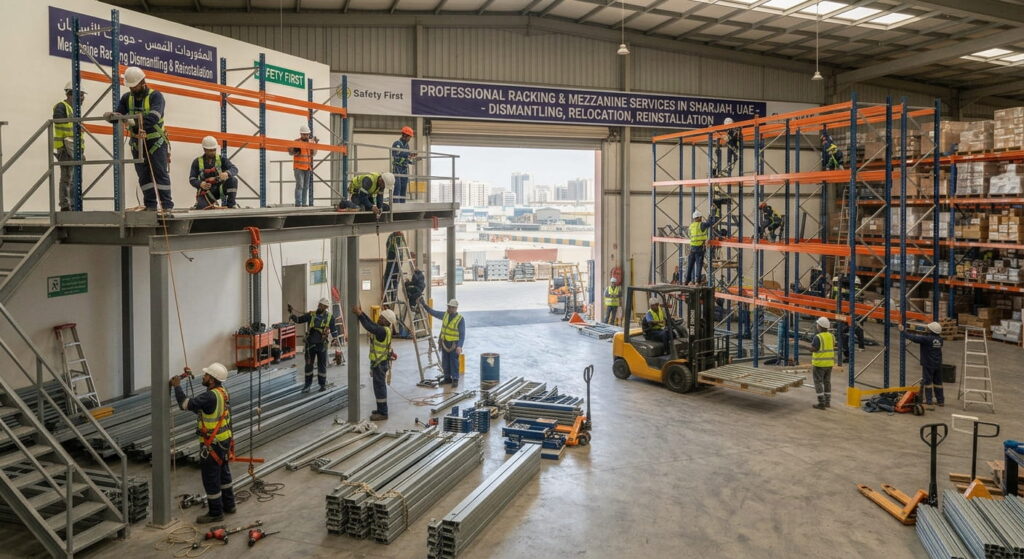
Warehouses rarely stay the same for long. A business grows, a lease ends, a new product line arrives, or a company simply decides to move into a free zone for the tax and customs advantages. When that happens, the pallet racking, the steel backbone of your storage, has to move too. Done badly, relocation means bent beams, missing parts and weeks of lost productivity. Done well, it is a smooth, predictable job that gets you back to full operation quickly.
Why Racking Relocation Is Not a Simple Lift-and-Shift
industrial Pallet Racking Dismantling and Reinstallation Pallet racking looks sturdy, but it is a precisely engineered system. Each upright frame, beam, safety clip and base plate is rated to carry a specific load. Take it apart carelessly and you risk damaging components that look fine but have lost their strength. A beam with a hairline bend or an upright with a crushed foot can fail months later, often when the shelf is fully loaded.
That is why dismantling and reinstallation should be treated as a planned project rather than a weekend task for whoever is available.
industrial Pallet Racking Dismantling and Reinstallation Step One: Survey and Planning
Every good relocation starts with a site visit. The team records the existing layout, counts every component, and checks the condition of the racking. They note the rack type (selective, drive-in, cantilever or push-back), the load capacity labels, and any damage that needs repair or replacement.
Planning also covers the destination. Does the new floor have the right flatness and strength? Is the ceiling height enough for the sprinkler clearance? Where do the aisles, fire exits and forklift routes go? Answering these questions on paper is far cheaper than finding out halfway through installation.
industrial Pallet Racking Dismantling and Reinstallation Step Two: Safe Dismantling
Before anything is unbolted, the racks must be completely emptied. Stock is cleared bay by bay, and many companies use this moment to reorganize or count inventory.
Dismantling then follows a reverse-build order. Beams come down first, and the upper levels are removed before the lower ones. Frames are taken apart last. Throughout, workers use proper lifting equipment, and each component is inspected as it comes off.
A few habits separate professionals from amateurs:
- Labeling: Every frame, bay and beam set is tagged so it can be rebuilt in the correct order.
- Sorting: Damaged parts are separated immediately so they never make it back into service.
- Packing: Small hardware such as bolts, clips and anchors is bagged and labeled by bay.
Working in Industrial Areas and Free Zones
industrial Pallet Racking Dismantling and Reinstallation Free zones add a layer of procedure that ordinary relocations don’t have. Most have their own regulations covering contractor approvals, work permits, vehicle access, working hours and material movement. Security gates, visitor registration and insurance paperwork are common requirements.
Contractors who work in these environments regularly already know the process. They arrive with the right documents, trained and certified staff, and the correct personal protective equipment. This avoids the frustrating situation where a crew is turned away at the gate because a permit wasn’t ready.
Industrial areas also tend to be busy. Shared roads, loading docks and neighboring businesses mean transport timing matters. Experienced teams schedule movements outside peak traffic and coordinate truck access in advance.
Step Three: Transport and Storage
industrial Pallet Racking Dismantling and Reinstallation Racking components are heavy and awkward. They are bundled, strapped and loaded so that frames and beams don’t rub or bend in transit. If the new warehouse isn’t ready yet, a temporary storage plan keeps parts organized and protected from moisture and impact.
Step Four: Reinstallation Done Right
Reinstallation is where careful dismantling pays off. Using the labeled components and the new layout drawing, the crew marks the floor, positions the frames, and anchors them with the correct fixings for the floor type. Beams are then fitted, safety locks are secured, and everything is checked for plumb and level.
Accuracy matters. An upright that leans even slightly reduces load capacity and can become a hazard under pressure. Good installers measure rather than guess.
Many projects also include these finishing touches:
- Column guards and end-of-aisle protectors to absorb forklift knocks
- Load capacity signage on every bay
- Wire mesh decking or safety barriers where needed
- Updated floor markings for aisles and walkways
industrial Pallet Racking Dismantling and Reinstallation Inspection and Compliance
Once the system is standing, a final inspection confirms that everything is correctly fitted and within its rated limits. Many companies also arrange periodic inspections afterward, since racking in daily use takes small hits that add up over time. Documented checks protect your people, your stock and your insurance position.
Choosing the Right Contractor
When comparing providers, look beyond price. Ask about their experience with your specific rack type, their safety record, how they handle damaged components, and whether they understand free zone requirements. References from similar projects are worth more than any sales pitch. Ask whether they can supply replacement parts or additional racking if your new layout needs it.
The Bottom Line
Dismantling and reinstalling pallet racking is about much more than moving steel. It is about protecting an investment, keeping people safe, and getting your operation running again with minimal downtime. With careful surveying, labeled and inspected components, an installer who knows how industrial areas and free zones operate, and a final safety check, your racking can serve you as reliably in its new home as it did in the old one.
