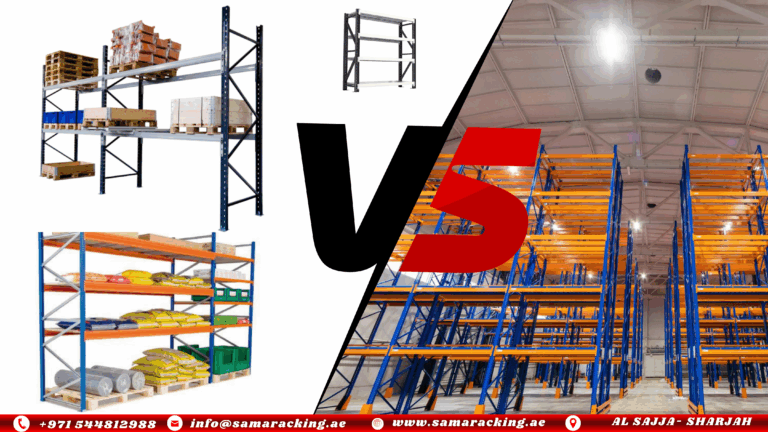
Pallet Racking in UAE: The Smart Way to Organise Your Warehouse
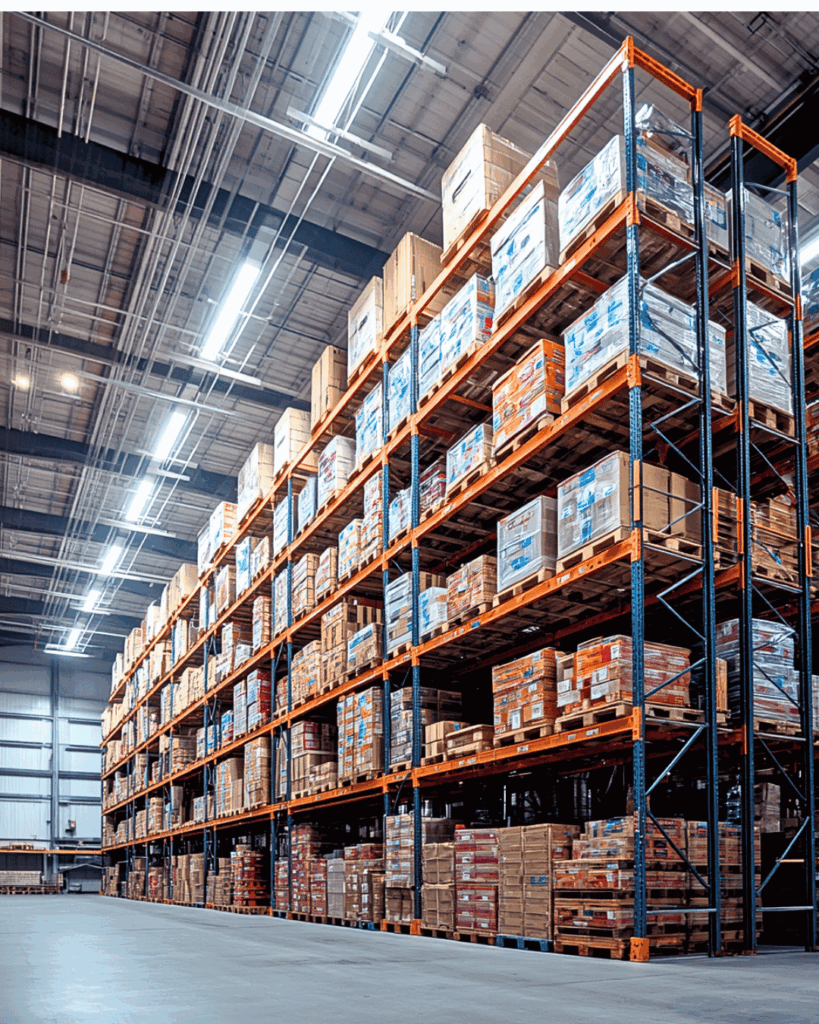
If your warehouse feels like a constant battle — stock piled in the wrong place, forklifts struggling to navigate, and space being wasted at every corner — pallet racking might be the single most impactful upgrade you can make. This guide breaks down everything businesses in the UAE need to know before choosing a pallet racking system, written without the industry jargon.
What Exactly Is Pallet Racking?
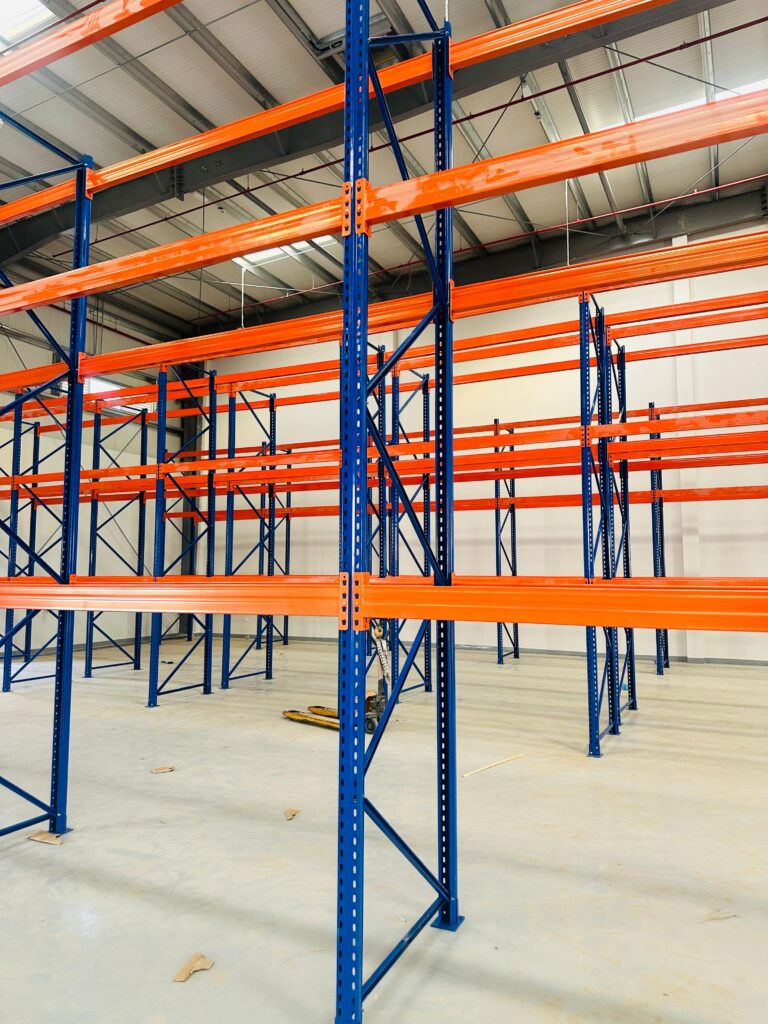
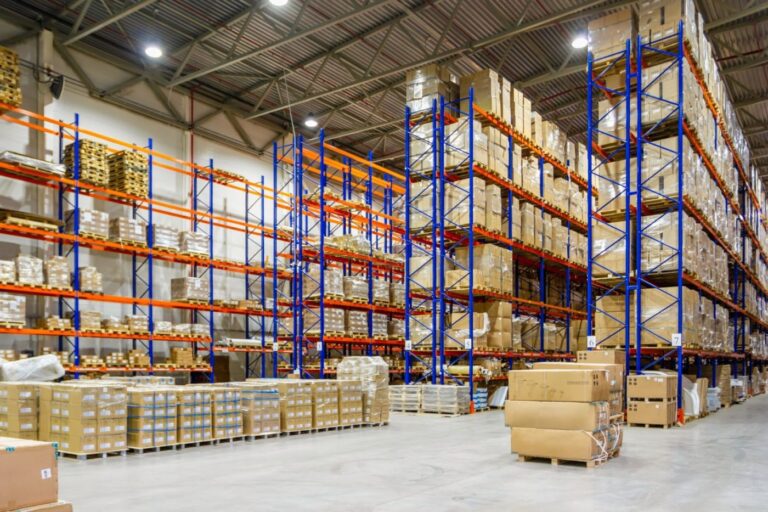
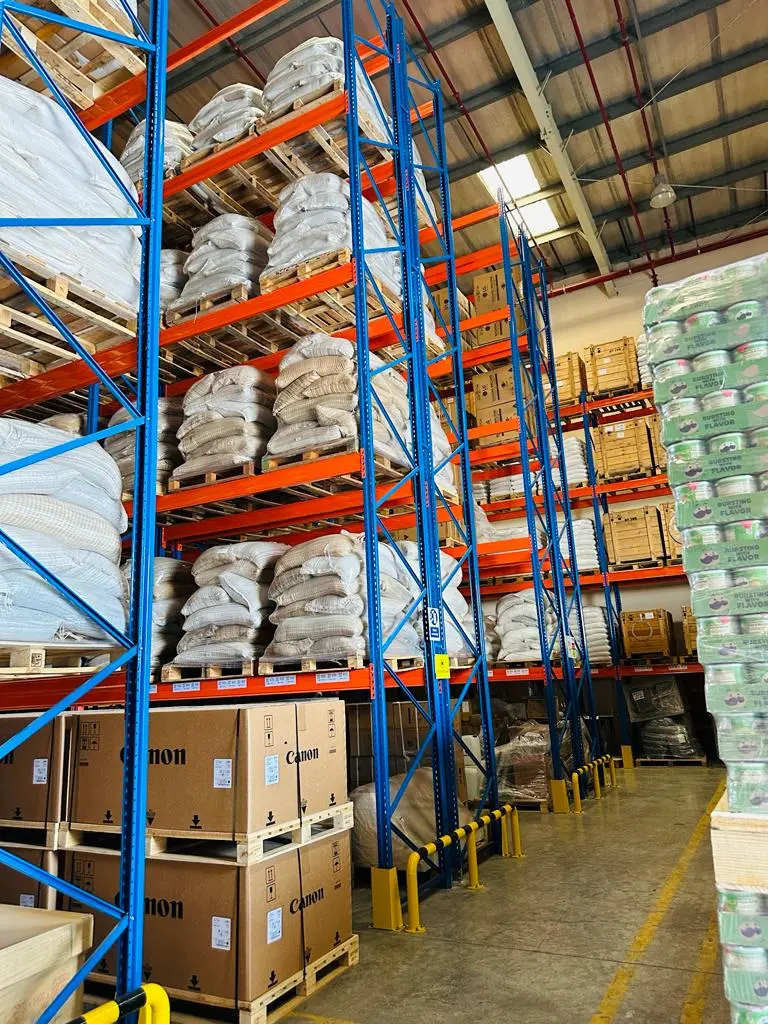
Pallet racking is a storage system designed to hold goods on pallets in horizontal rows across multiple levels. Think of it as vertical shelving built specifically for warehouses — designed to handle heavy loads, allow forklift access, and make the most of the height in your storage space rather than just the floor area.
In the UAE, where warehouse space in industrial zones like Al Quoz (Dubai), ICAD (Abu Dhabi), and Jebel Ali comes at a significant cost per square metre, going vertical is not just smart — it’s essential.
Types of Pallet Racking Systems Available in the UAE
Not all pallet racking is the same. The right type depends on what you’re storing, how often you need to access it, and how much space you have. Here’s a quick breakdown of the most common systems:
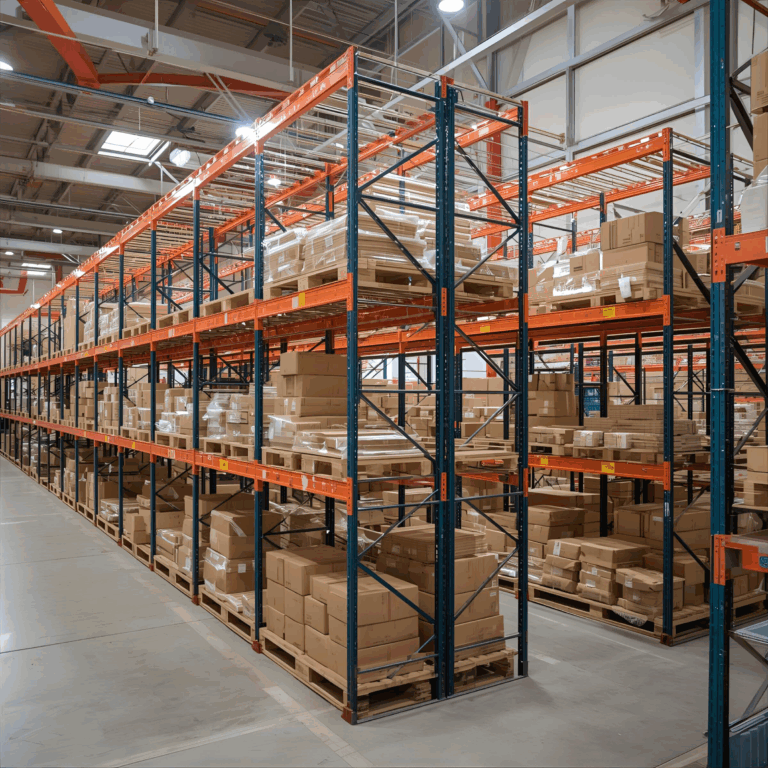
1. Selective Pallet Racking
This is the most popular option for a reason. Every pallet is directly accessible at any time, without needing to move others first. It suits businesses with a wide variety of SKUs and frequent stock rotation. It’s also the most cost-effective entry point.
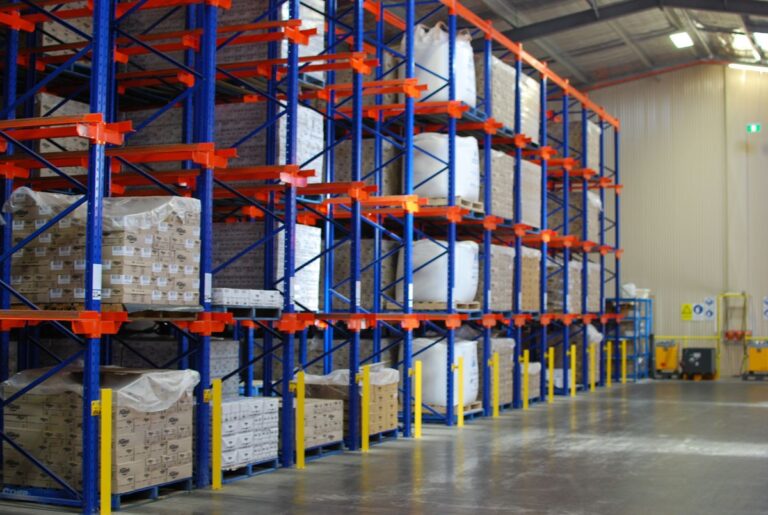
2. Drive-In Pallet Racking
Ideal when you store large quantities of the same product. Forklifts drive directly into the rack to load or retrieve pallets. It sacrifices easy individual access but dramatically increases storage density — up to 75% more than selective racking in the same footprint.
3. Push-Back Pallet Racking
Pallets are stored on a slight incline on rail carts. When a new pallet is loaded from the front, existing pallets are pushed back. When one is retrieved, the others roll forward automatically. It’s a good middle ground between accessibility and density.
4. Cantilever Racking
Not for pallets specifically, but worth knowing about. Cantilever racks are designed for long, awkward items like pipes, timber, or steel profiles — common needs in UAE construction and manufacturing sectors.
5. Pallet Flow Racking
A gravity-fed system where pallets load from the back and retrieve from the front. Perfect for products with expiry dates or strict FIFO (first in, first out) requirements — common in food, pharmaceutical, and FMCG industries.
Quick Comparison: Which Pallet Racking Type Is Right for You?
| Racking Type | Best For |
| Selective | Mixed SKUs, frequent access |
| Drive-In | High-volume, same product |
| Push-Back | Medium variety, high density |
| Cantilever | Long or irregular items |
| Pallet Flow | FIFO / date-sensitive goods |
Why UAE Businesses Are Investing in Pallet Racking Now
The growth of e-commerce, third-party logistics (3PL), and manufacturing across the UAE has pushed demand for efficient storage through the roof. Here’s what’s driving more companies to upgrade their warehouses:
• Rising warehouse rental costs make vertical space utilisation a financial priority
• UAE Vision 2031 and industrial growth targets are bringing more manufacturing to the country
• Stricter health and safety regulations mean unorganised storage is a real liability risk
• Businesses scaling into new GCC markets need storage systems that can grow with them
• Import/export volumes through Jebel Ali and Khalifa Port continue to increase year on year
Pallet racking is not just about tidiness — it’s about having a warehouse that can keep up with the pace of modern business.
Key Things to Consider Before Buying Pallet Racking in UAE
Floor Load Capacity
Before ordering any racking, get your warehouse floor surveyed. UAE industrial buildings vary significantly in their load-bearing ratings, and overloading a floor — even with a well-built racking system — can be dangerous and may invalidate your building permit.
Forklift Compatibility
The aisle width between your racking rows determines what type of forklift can operate comfortably. Counterbalance forklifts need wider aisles than reach trucks or narrow-aisle equipment. Match your racking design to the machinery you already have, or plan both together.
Ceiling Height
UAE industrial warehouses typically range from 7 to 15 metres in clear height. Pallet racking can be designed to take full advantage of this. However, sprinkler systems, lighting, and ventilation ducts all affect the usable height — factor these in before finalising your rack heights.
Load Weight Per Pallet
This one surprises many buyers. The weight capacity of a racking system must be matched to your actual pallet loads, not just the maximum rating on the product sheet. A system rated at 2,000 kg per beam level needs to be loaded based on actual distribution, not just total weight.
Future Expansion
A good pallet racking system should be expandable. Sama Racking’s modular designs mean you can add bays, extend rows, or reconfigure the layout as your business evolves — without scrapping your existing investment.
How Pallet Racking Is Installed in the UAE: What to Expect
The process with a professional supplier like Sama Racking typically goes like this:
1. Site Survey — a technician visits your warehouse to measure the space, check the floor, identify obstructions, and understand your operational flow.
2. Custom Design — a 2D or 3D layout is drawn up showing rack placement, aisle widths, entry/exit points, and total capacity.
3. Quote & Approval — all components are itemised with full pricing. Nothing is hidden.
4. Manufacturing / Supply — racking is either manufactured locally or imported based on the system type and lead time.
5. Professional Installation — a trained installation crew assembles and anchors the racking to the floor, following UAE safety guidelines.
6. Handover & Load Testing — before your team starts loading pallets, the system is checked and signed off.
Maintaining Your Pallet Racking: A Point Many Skip
In the UAE’s environment — with temperature swings, dust, and the occasional forklift bump — racking maintenance is not optional. Regular inspection catches small issues before they become dangerous ones.
Things to check quarterly:
• Upright columns for dents, bends, or corrosion
• Beam connections and safety locks — ensure they are fully engaged
• Floor anchors — check for movement or loosening
• Load notices — confirm weight limits are clearly marked on each bay
• Aisle widths — ensure no gradual encroachment has occurred
Some UAE municipalities and free zone authorities now require documented racking inspection records as part of warehouse compliance. Ask your supplier about ongoing inspection and repair services.
Frequently Asked Questions About Pallet Racking in UAE
How much does pallet racking cost in UAE?
Pricing varies based on system type, load capacity, height, and quantity of bays. Selective pallet racking typically starts from AED 450–700 per bay for standard configurations. Drive-in and flow systems are priced higher due to complexity. Always request a site-specific quote for accuracy.
Can pallet racking be customised for my warehouse layout?
Yes — and it should be. Every warehouse has different column positions, loading docks, mezzanine areas, and operational patterns. A professional supplier will design around your specific space rather than offering a one-size-fits-all solution.
Is pallet racking safe for UAE humidity and heat?
Standard steel racking is treated with powder coating to resist corrosion. For very humid environments — like warehouses near coastal areas in Ras Al Khaimah or Sharjah — hot-dip galvanised racking or additional protective coatings may be worth considering.
How long does pallet racking installation take?
A typical warehouse installation for 50–100 bays takes between 2 and 5 working days, depending on rack height, configuration, and the team size. Larger projects with mezzanine integration or complex layouts may take longer.
Do I need municipal approval to install pallet racking?
In most UAE free zones and industrial areas, you do not need separate approval for standard racking systems. However, if racking exceeds a certain height or attaches to structural walls, your landlord or free zone authority may require drawings and sign-off. Your racking supplier should advise on this.
Ready to Upgrade Your Warehouse Storage?
At Sama Racking, we’ve helped warehouses across the UAE get more out of their space — whether that’s a 500 sq/m facility in Dubai or a multi-floor distribution centre in Abu Dhabi. Our team handles everything from initial survey to final installation, and we stand behind every system we supply.Get in touch today for a free site survey and no-obligation quote. Call us, WhatsApp, or fill in our contact form at samaracking.ae — and let’s find the right pallet racking solution for your business.