Pallet Racking and Heavy Duty Racking in JAFZA: Which Storage System Fits Your Warehouse
Warehouses across Jebel Ali Free Zone (JAFZA) face a common challenge: how to store the most inventory in the least amount of space without sacrificing safety or accessibility. With JAFZA operating as one of the busiest free zones in the region, businesses handling everything from electronics to building materials need racking systems that match their specific throughput, product type, and building height. Choosing between pallet racking and heavy duty racking isn’t just a matter of preference — it directly affects operational efficiency, storage density, and long-term costs.
Understanding Pallet Racking and Heavy Duty Racking in JAFZA
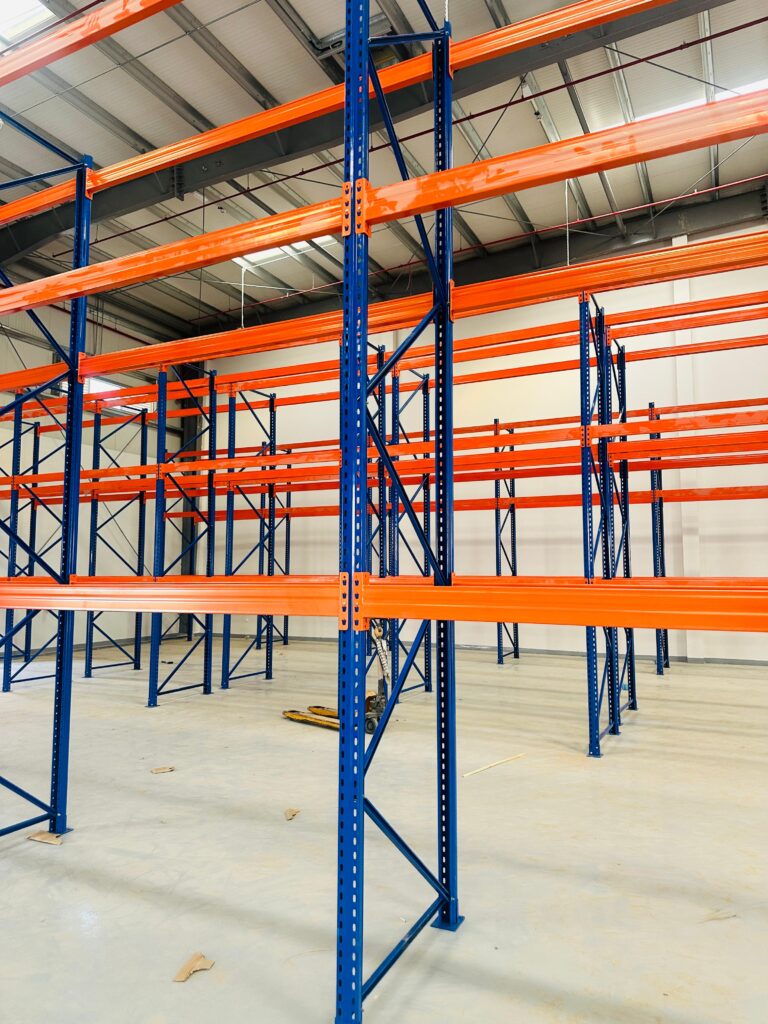
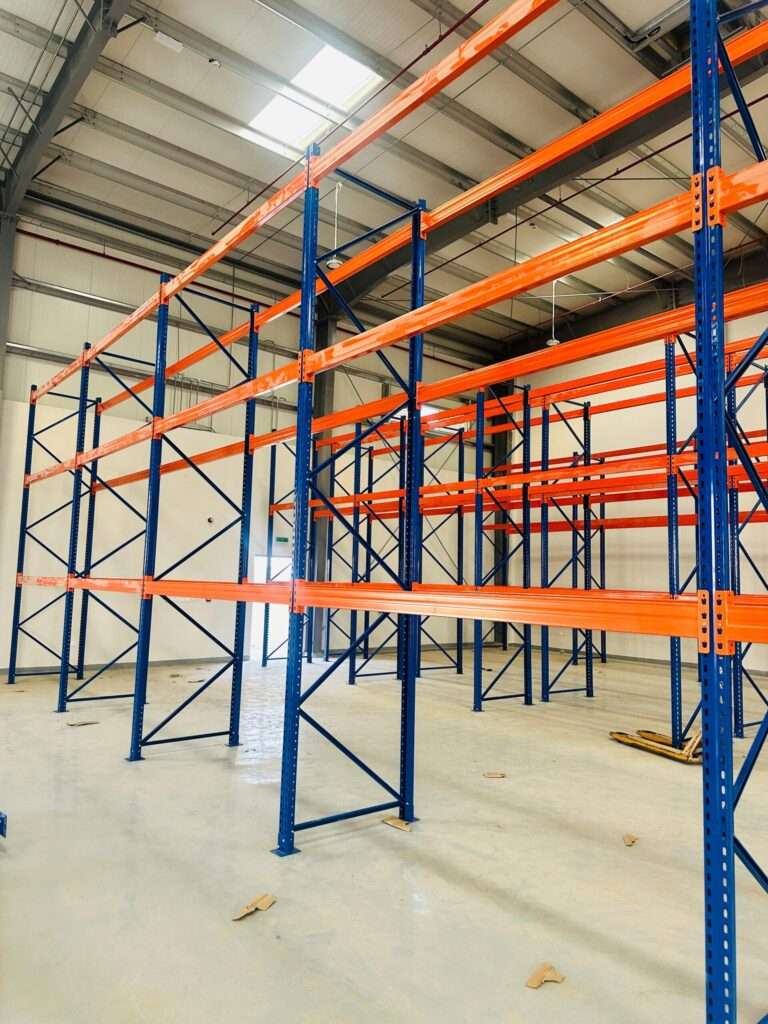
Pallet racking is the most widely used storage solution in JAFZA warehouses, and for good reason. It’s a modular system built from upright frames and horizontal beams, designed to hold palletized goods at multiple levels. Forklifts or reach trucks can access each pallet directly, which makes it ideal for businesses that need frequent, selective access to a wide variety of SKUs.
Selective pallet racking, the most common configuration, allows every single pallet to be accessed without moving another one first. This is a major advantage for distribution centers and trading companies operating out of JAFZA that deal with high SKU counts and need fast order fulfillment. Other pallet racking variations — such as drive-in, push-back, and double-deep racking — trade some selectivity for higher storage density, which suits businesses with fewer SKUs but larger quantities per product.
Pallet racking systems are also relatively quick to install and reconfigure, which matters in a free zone environment where tenants often adjust their warehouse layout as their business scales or their lease terms change.
Understanding Pallet Racking and Heavy Duty Racking in JAFZA
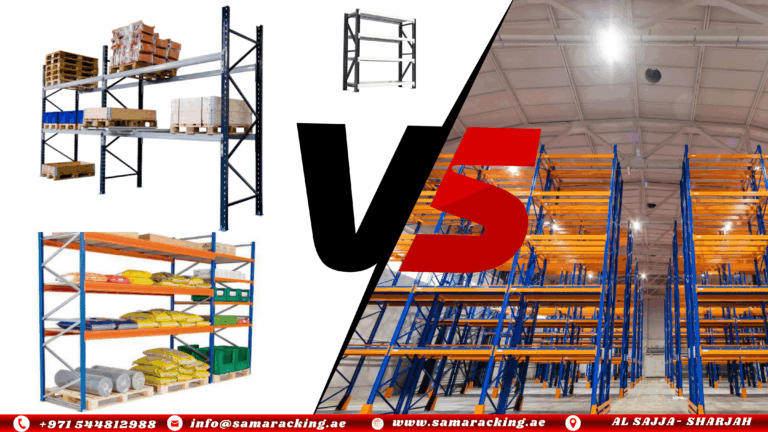
Pallet Racking and Heavy Duty Racking in JAFZA, on the other hand, is engineered for loads that go well beyond what standard pallet systems can handle. This includes oversized items, irregular shapes, coils, drums, long bars, or industrial components common in sectors like manufacturing, oil and gas services, and construction supply — all of which are heavily represented in JAFZA’s tenant base.
Heavy duty racking systems typically use thicker steel components, reinforced beams, and stronger connectors to support loads that can range from a few hundred kilograms per level to several tons. Cantilever racking, a common type of heavy duty racking, is particularly useful for long or bulky items like pipes, timber, or metal sheets that don’t sit well on standard pallets.
Because heavy duty racking is built for weight and durability first, it often takes up more floor space per unit stored compared to pallet racking. However, for businesses dealing with heavy, awkward, or non-standard inventory, this system prevents damage, reduces safety risks, and extends the life of both the racking and the goods it holds.
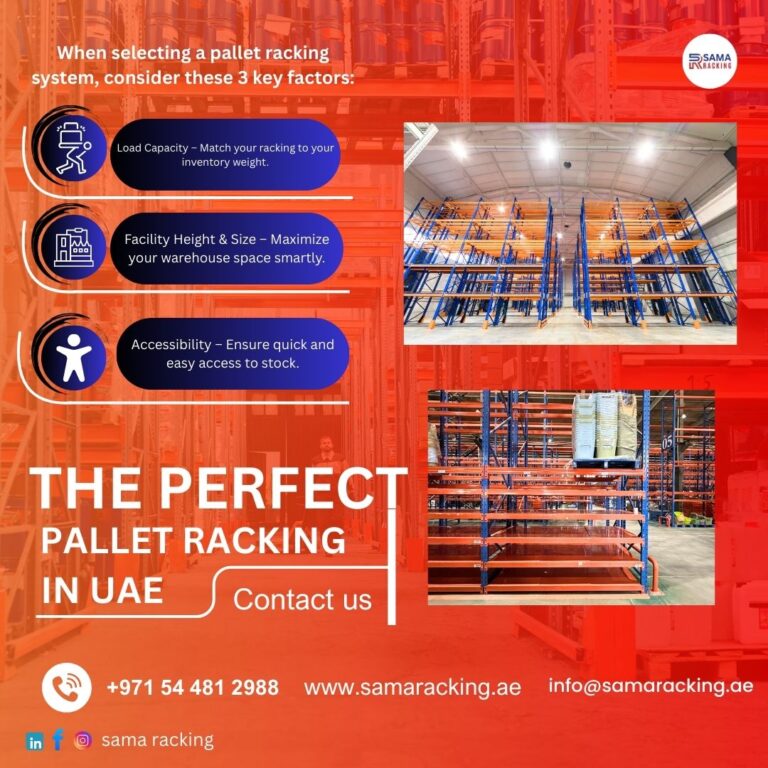
Key Factors That Determine the Pallet Racking and Heavy Duty Racking in JAFZA
1. Load Weight and Type
The single biggest factor is what you’re storing. Standard palletized goods under a few hundred kilograms per pallet are usually well-served by pallet racking. Anything heavier, irregularly shaped, or requiring long-span support points toward heavy duty or cantilever racking.
2. Warehouse Height and Layout
JAFZA warehouses vary significantly in clear height and column spacing. Taller facilities benefit more from pallet racking’s ability to stack multiple levels efficiently, maximizing cubic storage. Heavy duty racking, especially cantilever systems, often works better in facilities with wider bays and lower stacking requirements.
3. Inventory Turnover
If your business relies on fast-moving inventory with frequent picking and replenishment, selective pallet racking’s easy access is critical. Slower-moving, bulk-stored heavy items are better suited to heavy duty systems where accessibility is less of a priority than secure, long-term storage.
4. Forklift and MHE Compatibility
The type of material handling equipment used in your JAFZA facility — whether reach trucks, counterbalance forklifts, or specialized heavy-lift equipment — will influence aisle width requirements and, by extension, which racking configuration is practical.
5. Compliance and Safety Standards
Given JAFZA’s strict warehouse safety regulations, any racking system installed must meet UAE structural and fire safety codes. Heavy duty racking in particular requires proper load rating certification, since failure under overload conditions poses serious safety risks.
Making the Right Choice for Your Operation
Pallet Racking and Heavy Duty Racking in JAFZA warehouses don’t rely on a single system — they combine pallet racking for general inventory with heavy duty or cantilever racking for specialized items. This hybrid approach allows businesses to optimize different zones of the same facility according to what’s actually being stored there.
Before committing to a racking system, it’s worth having a professional assess your warehouse layout, ceiling height, typical load weights, and picking frequency. A poorly matched system can lead to wasted space, slower operations, or safety hazards, while the right setup pays for itself through better space utilization and smoother day-to-day handling.
Whether your JAFZA facility handles fast-moving retail goods, industrial equipment, or a mix of both, understanding the practical differences between pallet racking and heavy duty racking is the first step toward a storage system that actually works for your warehouse rather than against it.
Pallet Racking and Heavy Duty Racking in JAFZA