VNA Racking vs Selective Pallet Racking: Which Warehouse System Fits Your Space?

Choosing the right pallet racking system can make or break your warehouse’s efficiency. Two of the most popular options—Very Narrow Aisle (VNA) racking and Selective Pallet Racking—offer very different benefits depending on your space, budget, and operational needs. Let’s break down the differences so you can make the right call for your facility.
What Is Selective Pallet Racking?
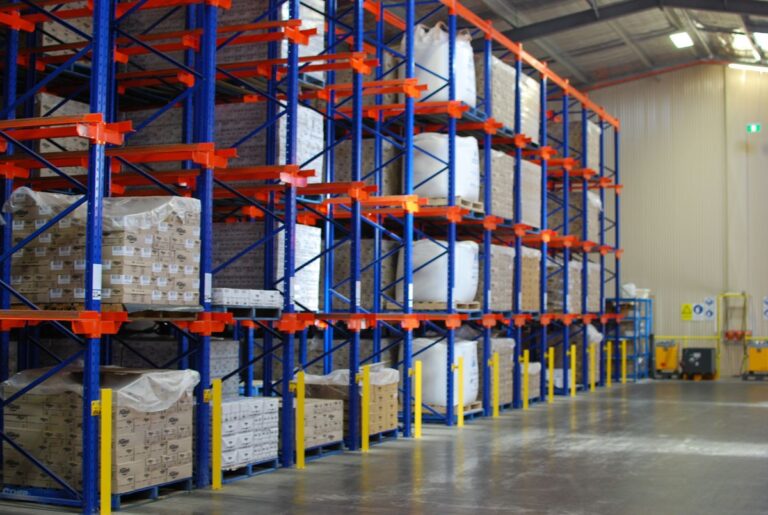
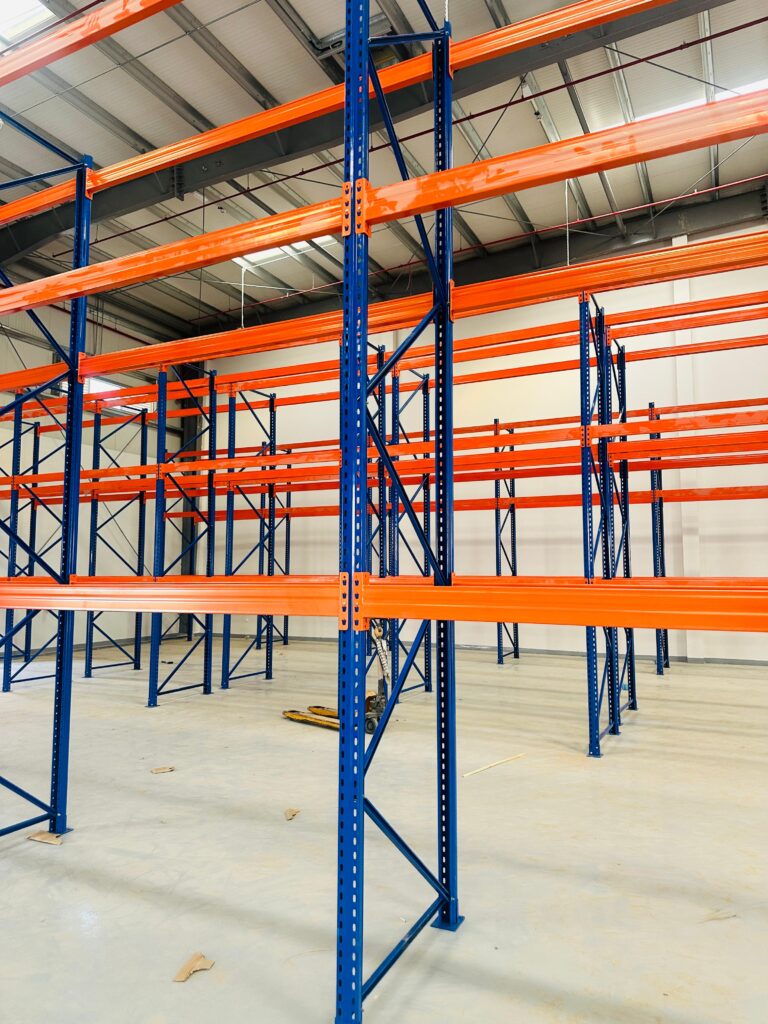
Selective pallet racking is the most common and widely used storage system in warehouses today. It’s simple: pallets are stored in single-depth rows, and every pallet is directly accessible from the aisle. Forklifts can drive straight up to any pallet position without having to move other loads first.
This system is popular because it’s affordable, easy to install, and flexible enough to accommodate a wide variety of product types and sizes. If your warehouse handles many different SKUs and needs fast, direct access to every single pallet, selective racking is usually the go-to choice.
Pros of Selective Racking:
- Lower upfront cost compared to other systems
- 100% direct access to every pallet
- Easy to reconfigure as your inventory changes
- Works with standard forklifts (no specialized equipment needed)
- Simple to install and maintain
Cons of Selective Racking:
- Requires wider aisles, which reduces usable storage space
- Lower storage density compared to other racking types
- Not ideal for facilities with limited square footage
What Is VNA Racking?
VNA, or Very Narrow Aisle racking, is designed specifically to maximize storage density in warehouses where floor space is limited. As the name suggests, VNA systems use significantly narrower aisles—often as tight as 5 to 6 feet, compared to 10-12 feet for selective racking.
Because the aisles are so narrow, VNA systems require specialized equipment like turret trucks or swing-reach forklifts that can maneuver and lift pallets within that confined space. Many VNA setups also use guidance systems—either wire-guided or rail-guided—to keep forklifts precisely on track as they move through the aisles.
Pros of VNA Racking:
- Significantly higher storage density (can increase capacity by 40-50% or more compared to selective racking)
- Makes the most of vertical space, often storing pallets much higher
- Ideal for facilities with limited floor space but high storage demands
Cons of VNA Racking:
- Higher upfront investment (specialized forklifts and guidance systems aren’t cheap)
- Requires trained operators for specialized equipment
- Less flexible—reconfiguring the layout later is more complex and costly
- Maintenance and repairs can be more involved due to guidance systems
Key Differences: Side-by-Side
Aisle Width: Selective racking needs 10-12 feet; VNA needs only 5-6 feet.
Storage Density: VNA offers noticeably higher density, often 40-50% more pallet positions in the same footprint.
Equipment: Selective racking works with standard forklifts. VNA requires turret trucks or swing-reach trucks, plus guidance systems.
Cost: Selective racking is more budget-friendly upfront. VNA carries a higher initial investment but can pay off in space savings over time.
Flexibility: Selective racking is easier to reconfigure and adapt. VNA is more rigid once installed.
Accessibility: Both offer direct access to every pallet, but selective racking allows more forklift maneuverability.
Which System Is Right for You?
The answer really comes down to three factors: your available space, your budget, and your operational needs.
Choose Selective Racking if:
- You have ample floor space and don’t need to maximize every square foot
- Your inventory changes frequently and you need flexibility
- You’re working with a limited budget
- You handle a high volume of different SKUs that need fast, easy access
Choose VNA Racking if:
- Your floor space is limited but you need to store large volumes of inventory
- You’re building a new facility and can plan the layout around VNA from the start
- You have the budget for specialized equipment and operator training
- Your inventory is relatively stable and doesn’t require constant reconfiguration
Final Thoughts
There’s no one-size-fits-all answer when it comes to warehouse racking. Selective pallet racking remains the industry standard for good reason—it’s affordable, flexible, and easy to work with. But if you’re dealing with rising rent costs, limited square footage, or a need to scale storage capacity without expanding your building, VNA racking might be the smarter long-term investment.
Before making a decision, it’s worth consulting with a racking specialist who can assess your specific space, inventory turnover, and growth plans. The right system isn’t just about storing more pallets—it’s about creating a warehouse that works efficiently for your team, day in and day out.